Pirates, Puzzles, and a Planet Called Word:
Where Play and Language Create Meaning
"Two minds enter. Two minds leave. Neither entirely as they were."
— PUZZLEMENTS 2:2
By Liz Sánchez Rasking
Dear Reader,
This issue, we’re exploring a museum, a puzzle room, hours of productive confusion, and the business case for delight. See, what happened was... yours truly took Jared to a museum. That's it. That’s the whole setup.
Okay, okay, there's more. There's always more.
Planet Word is a museum in Washington, D.C. dedicated to language — how it works, how it fails us, how it saves us, and occasionally, how it shows up on the back of a CVS receipt. I knew Jared would love it. The man is a walking thesaurus with strong opinions about semicolons and languages spoken before the fall of Rome. He once sent me a voice memo about the word ‘utilize.’ I say all this with nothing but affection.
So I planned the trip, booked the visit, and loaded Gizmo into my bag.
(Gizmo goes everywhere. If you haven't met Gizmo, you haven't met me.)
A Non-Exhaustive Field Report
The bathrooms are a highlight. I say this without irony. The stall doors are printed with philosophical puns that you will absolutely read three times, pretend you didn't laugh at, and then think about in the shower for the next four days.
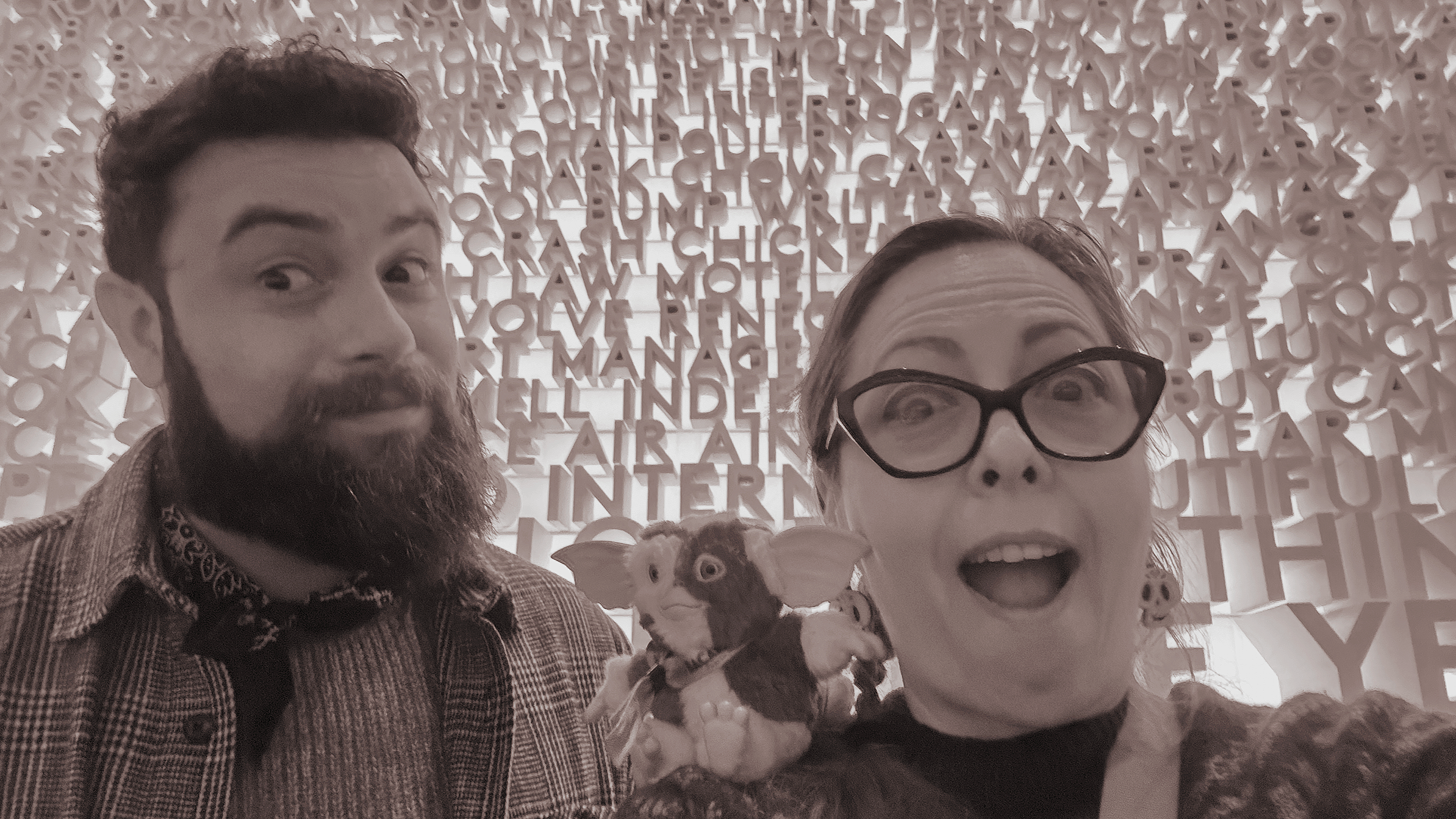
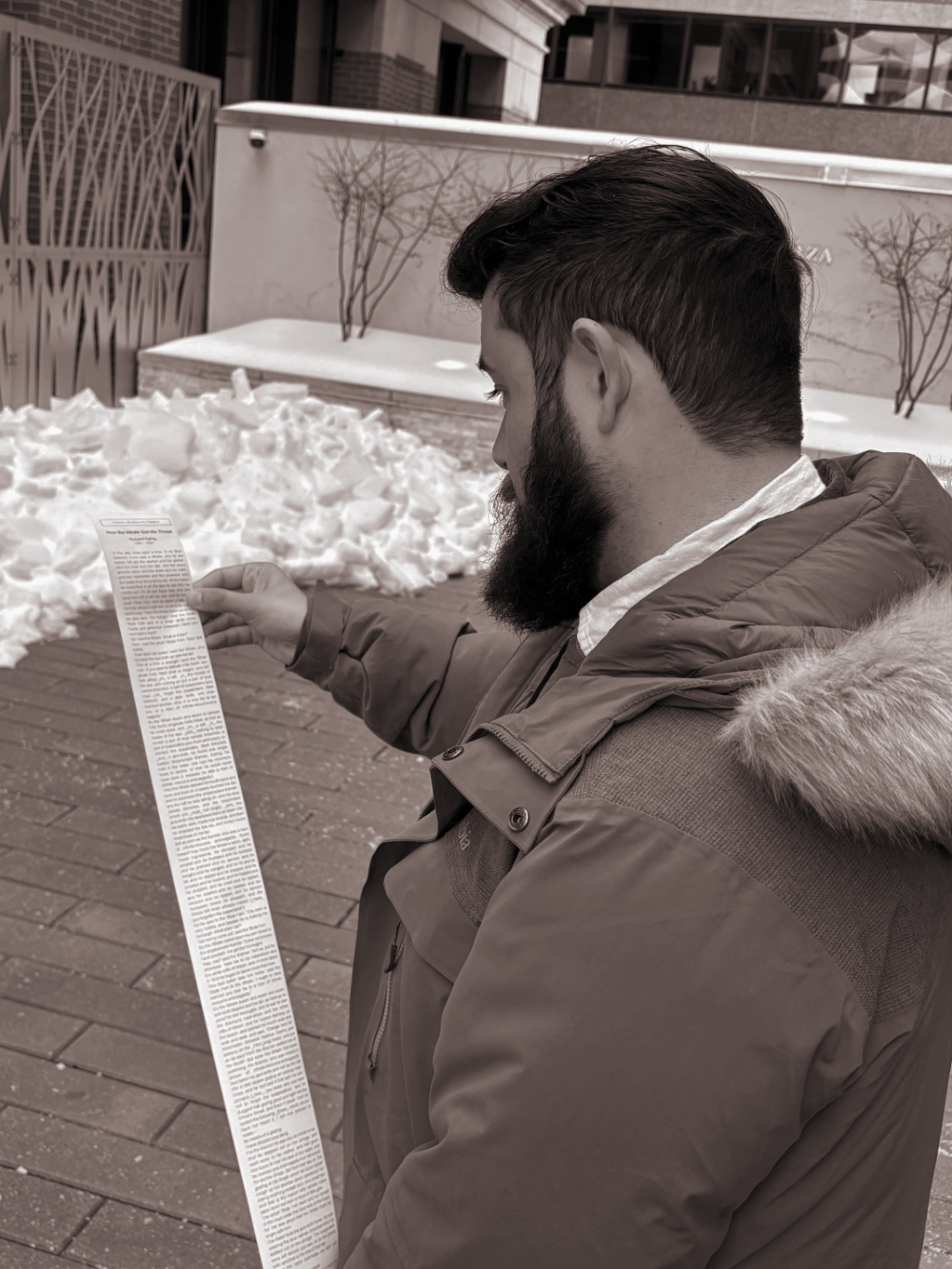
The main galleries include a ceiling installation — a constellation of words floating overhead that you can actually reach up and interact with — and what I can only describe as the CVS Receipt Experience, wherein beloved works of American literature are printed in CVS receipt format. Long. Unnecessarily long. Correct.
There is also a Toni Morrison quote on the wall that stopped me mid-step, which I will not reproduce here because you should go see it yourself.
And then. THEN.
There is the puzzle room.
The Part Where We Had Absolutely No Idea What We Were Doing
(For the first 45 minutes.)
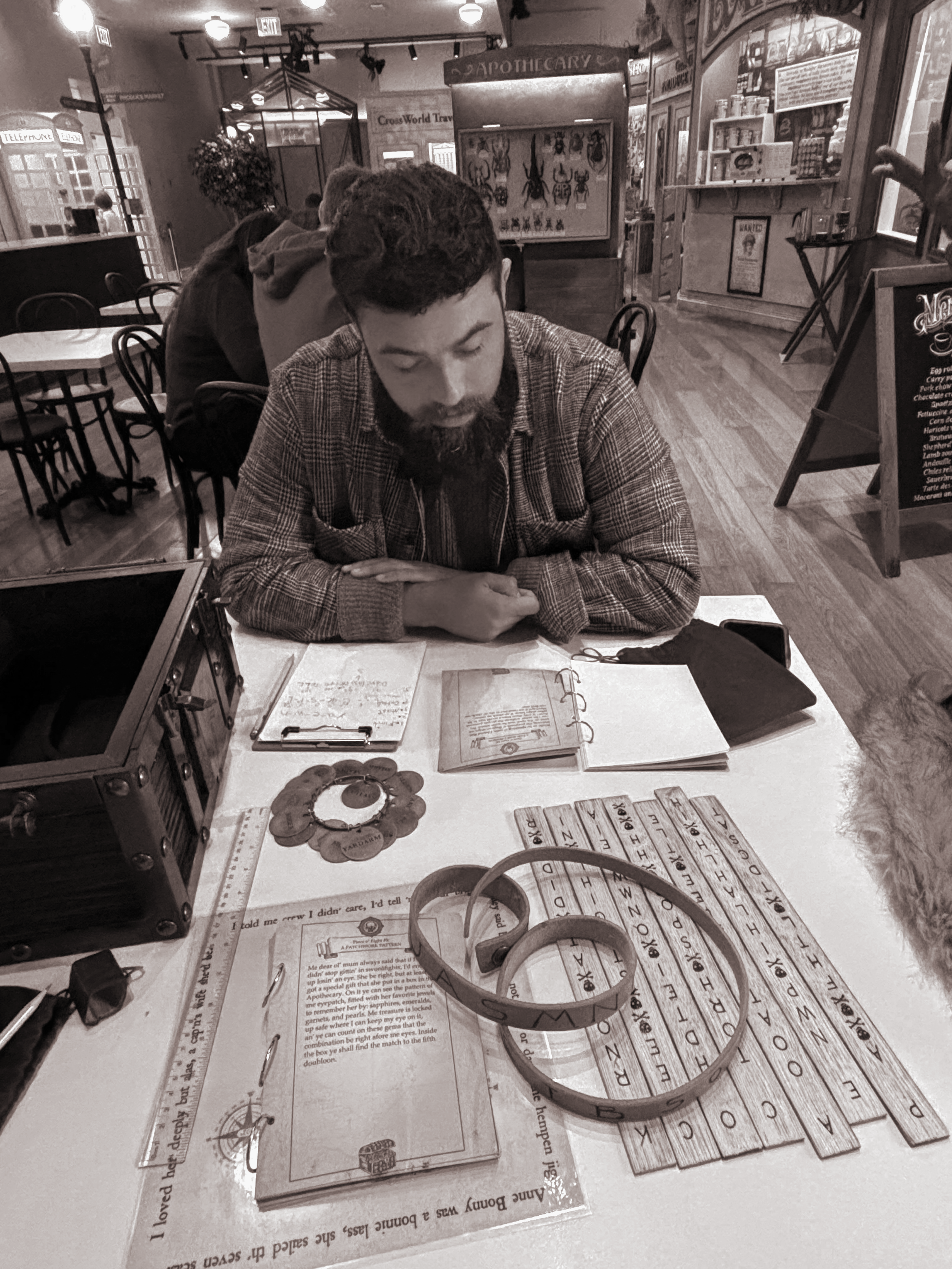
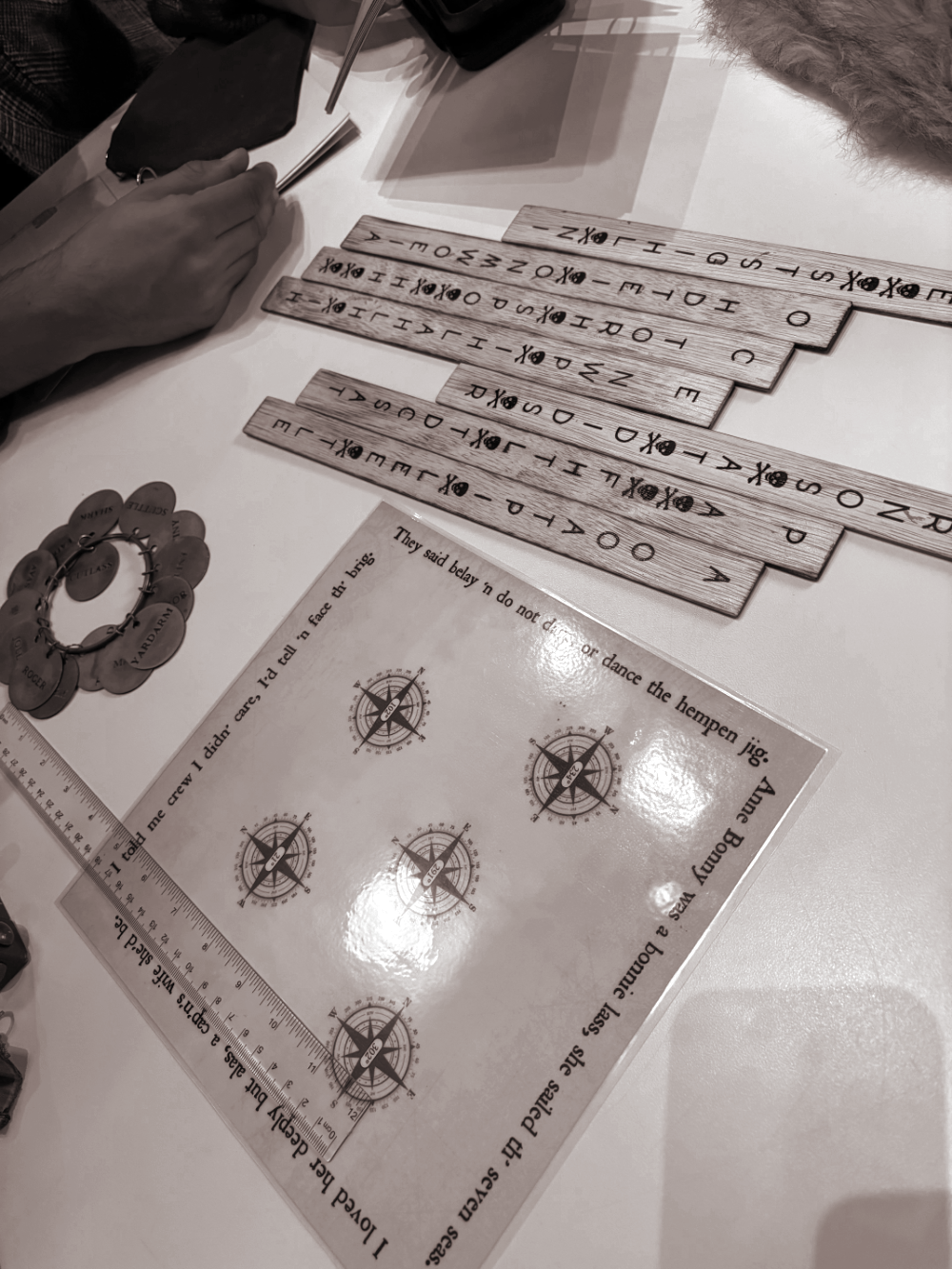
The paid experience is one giant analog puzzle room (called Lexicon Lane) — inside it, several themed puzzle sets await. There’s P for Pirate, C for Computers, and so on. I steered us toward the pirate puzzle specifically for Jared (the man has a penchant for beards, pipes, and tiki bars). I knew he'd light up at it. There were no screens. No instructions. You walk in, the door closes, you choose your puzzle and the adventure begins.
Except... how do you solve something when you don’t know what you’re looking for or where to start looking?
We stood there. We looked at each other. We looked around the room. We looked at each other again.
Each station holds clues. What the clues are for is not remotely obvious until you've read them for approximately the ba-gillionth time. I am a pattern recognition person by nature and by training. If you put me in a room with clues, I will find the red thread connecting them eventually. I started cataloguing. What's here? What’s there? Why might that be there? What connects? What doesn't fit?
Jared, it turns out, knows nautical terminology. (Because of course he does.) The literary clues were his territory. The navigational clues were mine. As we progressed in our quest to solve the puzzle, we both came to the realization that neither of us could have cracked it alone.
For the first forty-five minutes we circled: Is this a clue? I think this is a clue. Wait — is THAT a clue?! The beginning of our session was filled with lots of wrong turns that were, it turned out, not wrong at all. Just early.
And then something magical happened. We were just... playing. Genuinely, unselfconsciously playing — like little kids making the most of having to stay indoors on a rainy day. I couldn't have told you how long we were in that room. We lost track of time. It didn't matter and I didn't want to know.
The Moment
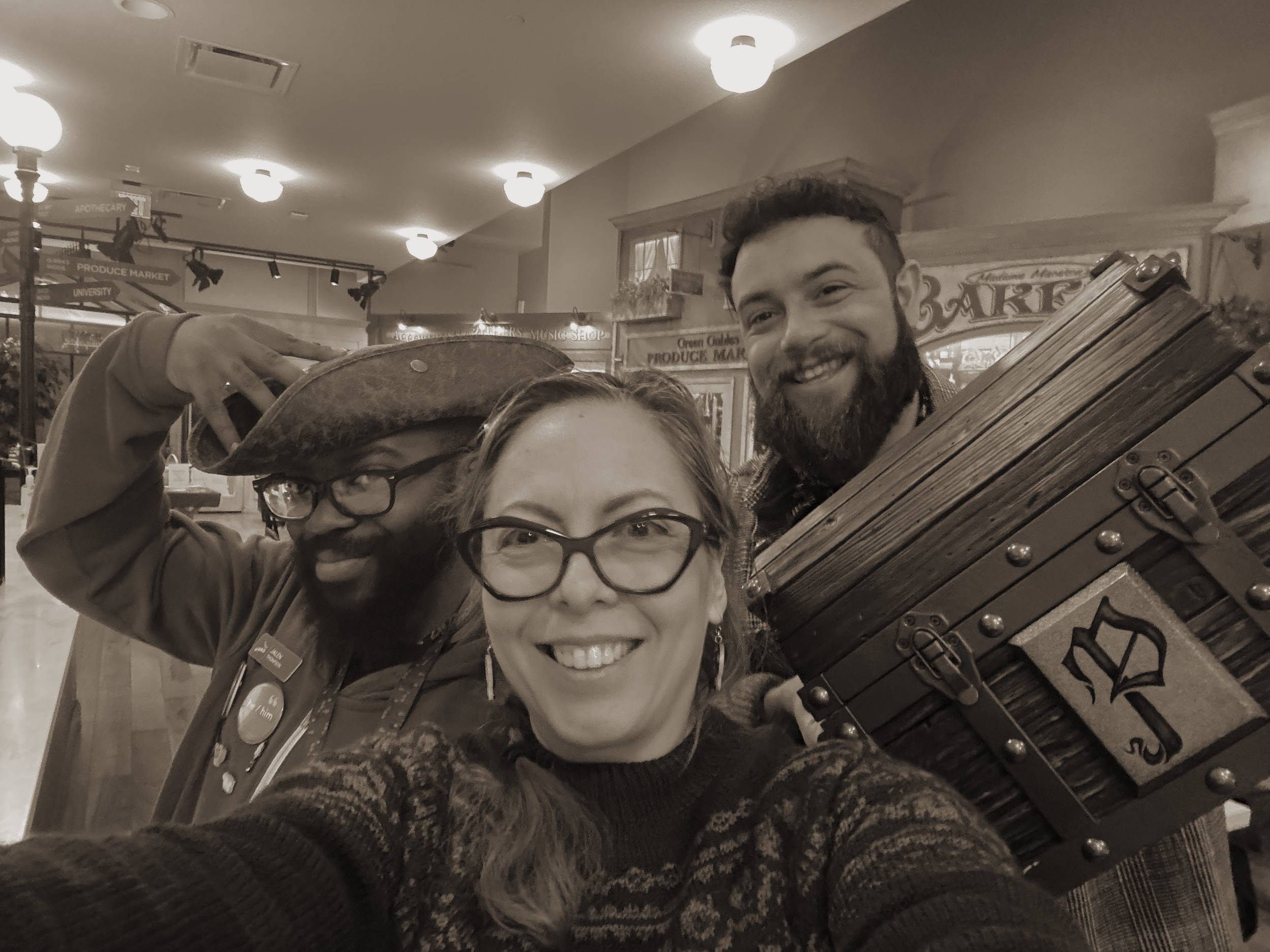
I won't tell you what it was, because if you ever find yourself in that room, I want you to feel what we felt when the answer finally surfaced.
What I will tell you is this: there is a specific quality of delight that comes from solving something with another person. Not for them. Not despite them, with them.
We were Mulder and Scully. Better yet, we were Gilligan and the Skipper. (I'll let you decide who was who.) We were, if I'm being honest, the most distilled real-world version of what Looking Glass Strategies actually is. Two people who think differently, working the same problem, in a room with no instructions, until something becomes clear.
It felt like the work. It felt tangible.
The Part That's Actually About Business (Bear With Me)
Good brand strategy is, at its core, a puzzle room.
The client walks in. The room has clues. No one has given them instructions. Most of the time, they've been standing in there for a while already — sure that something isn't working, not entirely sure where to start. Our job is to walk in with them. To notice what they've been too close to see. To bring the pattern recognition and the nautical terminology (metaphorically speaking) and to stay in the room until something clicks.
The delight when it clicks? That's not a bonus. That's not a warm fuzzy sidebar to the deliverable.
That’s the whole point!
I want every client to feel what Jared and I felt in that room on a wintry Saturday afternoon in Washington, D.C. That's not a sentiment. That's a business objective. Experiencing victory and camaraderie with your clients is important because alignment isn’t built through presentations. It’s built through shared discovery.
Before I Go
Planet Word is free to visit. The puzzle room has a nominal fee and is completely worth it. Abi at the front desk is wonderful. You should take the time to read the bathroom stall doors — yes, all of them.
Last but not least, bring someone you trust not to judge you when you embrace awe and whimsy in the process of building something new. Even if it takes a few hours of productive confusion to get there.
— Your pal, Liz
P.S. Gizmo figured out the first clue. I'm not taking credit for that.